
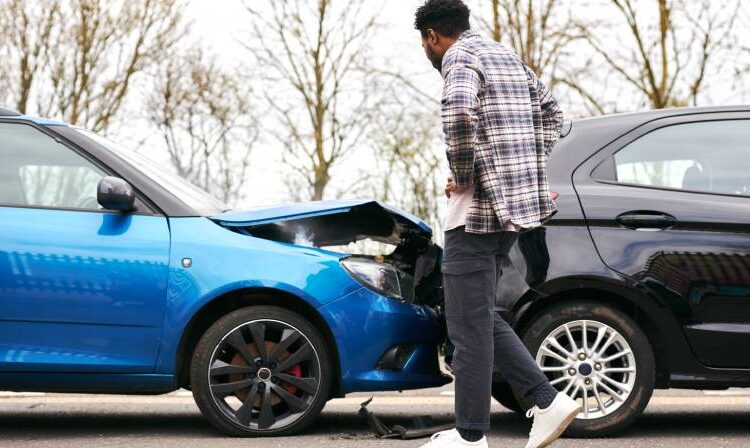
Rear-ends may happen more often than you think. Rear-end crashes account for more than 29% of all crashes in the United States, according to the National Highway Traffic Safety Administration. With that said, rear-end collisions are not something to overlook, especially when it happens to you.
This guide covers what to do in the minutes after being rear-ended, how fault actually gets decided in Texas, and why everything changes when the vehicle that hit you was a commercial truck.
What is a Rear-End Collision?
A rear-end collision (often called simply a "rear-ender") is a type of car accident that occurs when one vehicle collides with the back end of another vehicle. Rear-end collisions often occur when the driver in front suddenly stops or slows down, and the driver behind fails to react quickly enough to avoid a collision. Rear-end collisions can also be caused by other factors, such as bad weather, tailgating, and distracted driving.
Who Is at Fault When You Are Rear-Ended in Texas?
In most rear-end crashes the driver in back bears the fault, because Texas law expects every driver to keep enough following distance to stop for the traffic ahead. A driver who hits the car in front of them usually followed too closely, drove too fast, or looked away from the road. That practical reality is why adjusters often concede liability in a straightforward rear-ender.
But be careful with the word "always." Texas has no rule that automatically pins fault on the rear driver. Fault is decided case by case, in percentages, under the state's comparative negligence law. Expect the insurance company to look for ways around the usual outcome: a common move is to blame the lead driver, claiming a brake light was out, a stop was too sudden, or a lane change cut the rear driver off. These arguments rarely hold up against the physical evidence, and an experienced lawyer counters them with vehicle inspections, witness statements, and crash data. The lesson is not to assume the claim will handle itself. The fault story is built from evidence, and the side that gathers it first usually wins the argument.
What Does Comparative Negligence in Texas Mean?
In the state of Texas, there's a law called "comparative negligence." This law says that if you're involved in an accident, and it's determined that you're partially at fault, your compensation will be reduced by the percentage of fault attributed to you. Put more than 50 percent of the blame on you and you recover nothing at all.
Picture the insurer convincing a jury to pin 20% of the blame on you. Under comparative negligence, a $10,000 award would shrink by that share, leaving you with $8,000. That math is exactly why insurers push blame onto the person who was hit, and why the evidence fight matters.
It's important to note that each case is different, and the amount of fault attributed to each party can vary. An experienced car accident lawyer can help you determine the percentage of fault you may be attributed in your case.
What If a Truck Rear-Ended You? The Stakes Change
A rear-end crash with a commercial truck is a different case from the first minute. Start with the physics: a loaded semi can take up to two football fields to stop at 65 mph and needs about 40 percent more stopping distance than a car, which is exactly why professional drivers are trained to leave room. We break down what that means for fault in our guide to semi truck stopping distance. A trucker who plowed into stopped traffic left himself no room, and that is on the driver and the carrier, not on you.
The evidence is different too. The truck's engine module recorded its speed and braking in the seconds before impact, and the driver's electronic logs show how long he had been behind the wheel. That data can be overwritten in weeks, and federal rules only require carriers to keep driver logs for six months, so a preservation demand needs to go out fast. The defendant is different as well: instead of one driver's personal policy, you face a motor carrier that federal law generally requires to hold at least $750,000 in liability coverage, defended by an insurer that handles these claims every day. If an 18-wheeler or delivery truck hit you from behind, our rear-end truck accident page covers how these cases are built and won.
Common Injuries From Rear-End Accidents
- Head injuries: These can range from minor concussions to more serious traumatic brain injuries. If you hit your head in a rear-end accident, seek medical attention immediately.
- Soft tissue injuries: These include injuries to the muscles, tendons, and ligaments. Whiplash is a type of soft tissue injury that's often seen in rear-end accidents.
- Fractures: These can range from simple fractures that heal on their own to more serious compound fractures that require surgery.
- Back & neck injuries: These can range from mild sprains and strains to more serious herniated discs that can lead to chronic pain lasting months or even years.
What To Do After Getting Rear-Ended
- Check for injuries: The first thing you need to do is check yourself and your passengers for injuries. If anyone is injured, call 911 right away.
- Move to a safe location: If you can move and there are no injuries, move your car to a safe location off the road to prevent further accidents.
- Notify the police and file a report: Call the police and file a report. This will document the accident and can be used if you need to file an insurance claim or personal injury lawsuit.
- Take photos: If you have a camera or smartphone, take photos of the damage to your car and the other driver's car. These can be used as evidence. If a commercial truck hit you, photograph the carrier's name and USDOT number on the cab as well.
- Exchange information: Get the contact information of all the drivers and witnesses involved in the accident.
- See a doctor: You must see a doctor as soon as possible. Even if your injuries seem minor, they could be more severe than they appear.
- Call your insurance agent: Your agent will help you navigate the claims process and get the compensation you deserve. Be cautious with the other driver's insurer, though, and think twice before giving a recorded statement.
Frequently Asked Questions
Is the rear driver always at fault in a rear-end collision?
Usually but not automatically. Texas expects every driver to keep enough following distance to stop for the traffic ahead, so the rear driver typically bears most of the fault. Texas has no rule that makes it automatic, though. Fault is assigned in percentages under the state's comparative negligence law, and insurers argue about brake lights, sudden stops, and lane changes to shift blame.
How long does an insurance company have to settle a rear-end claim in Texas?
If you claim under your own policy, Texas Insurance Code Section 542.056 generally gives your insurer 15 business days after it receives all the items it requested to accept or reject the claim, with extensions in some circumstances. The other driver's liability insurer faces no such fixed deadline toward you, and accepting a claim is not the same as paying it fairly, which is where negotiation or a lawsuit comes in.
What should I do if a semi truck rear-ended me?
Follow the same steps as any rear-end crash, then move faster. A commercial truck case involves federal safety rules, a corporate insurer, and electronic evidence that disappears: the truck's engine data can be overwritten in weeks and carriers only have to keep driver logs for six months. Record the carrier's name and USDOT number from the cab and talk to a lawyer within days.
Should I see a doctor after a rear-end crash if I feel fine?
Yes. Whiplash, concussions, and disc injuries commonly take hours or days to produce symptoms, and a same-day medical visit creates the record that ties your injuries to the crash. A gap in treatment is one of the first things an insurer uses to argue you were not really hurt.
Hire An Experienced Rear-End Accident Attorney
When you get into any car accident, such as rear-end collisions, you must have the right kind of lawyer on your side. The other driver's insurance company will do everything they can to ensure you don't get the settlement you deserve.
We at Sgt. Pike have experience dealing with rear-end accidents. If you have been involved in a rear-end accident, we can help you. We will work diligently to get you the compensation that you deserve. Contact us today for a free consultation.

No fee unless we win.
Past results do not guarantee a similar outcome.