
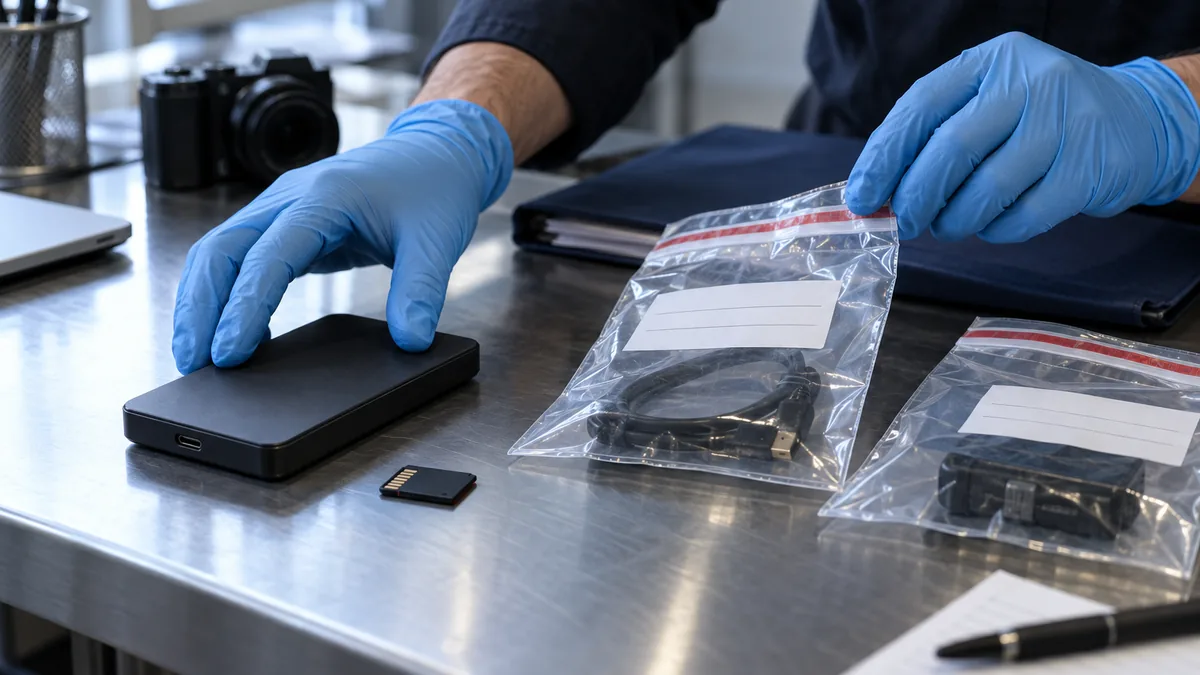
Quick answer: A spoliation letter is a written demand, sent to the trucking company and its insurer, to preserve the truck and every record connected to the crash: engine data, electronic logs, the driver's file, test results, and dispatch and maintenance records. It matters because trucking evidence disappears on a schedule. Federal rules let carriers discard electronic log records after six months and inspection reports after three, and engine data can be overwritten in weeks. Once the letter is received, destruction can bring court sanctions, so it should go out within days of the wreck.
What Is Spoliation of Evidence?
Spoliation is the legal term for losing or destroying evidence that should have been kept for a claim. It is not a separate lawsuit in Texas. It is a problem the trial judge handles inside the injury case, and the way courts handle it is what gives a preservation letter its teeth.
The duty to preserve does not wait for a lawsuit to be filed. Under Texas law, as the Texas Supreme Court explained in Brookshire Brothers, Ltd. v. Aldridge (Tex. 2014), a party must preserve relevant evidence once it knows or reasonably should know there is a substantial chance a claim will be filed. A carrier whose 80,000-pound rig just put someone in a hospital usually satisfies that standard on its own. A preservation letter removes any argument about it. After the letter arrives, the company cannot claim it had no idea anyone would want the driver's logs.
Why Does Trucking Evidence Disappear So Fast?
Because most of it is working paperwork with a shelf life, not a permanent archive. The federal safety rules that require these records also permit carriers to discard them on a routine schedule:
- Electronic logging device records: six months. Under 49 CFR 395.8(k), a carrier must keep a driver's records of duty status and supporting documents for six months. After that, deletion is lawful. Our article on truck black box data explains what those records show and why they decide fatigue cases.
- Driver vehicle inspection reports: three months. Reports prepared under 49 CFR 396.11 documenting defects a driver found or was told about are kept on a three-month cycle. A brake or tire problem noted before the crash can vanish from the file while you are still in treatment.
- Engine data: weeks, sometimes days. The engine control module has no federal retention rule at all. Its crash snapshot can be overwritten in the ordinary course of driving once the truck goes back to work, or lost entirely if the truck is repaired or salvaged.
- Camera footage and telematics: whatever the vendor's plan allows. Retention here is set by corporate contract rather than regulation, and many fleet platforms appear to cycle footage on much shorter schedules than the federal records. Exact windows vary by company, which is precisely why the letter demands the footage by name.
None of this requires bad faith. A carrier that simply follows its normal routine will still erase the record of the crash. The letter is what interrupts the routine.
What Does a Preservation Letter Actually Demand?
A well-drafted spoliation letter names the evidence with specificity, because a company cannot be sanctioned for failing to keep something nobody asked it to keep. In a serious 18-wheeler case, the demand typically covers:
- The tractor and trailer themselves, held in their post-crash condition and not repaired, altered, or sold until inspected.
- A download of the engine control module, performed properly so the speed and braking data are captured before they are overwritten.
- Electronic logging device records, including records of duty status, supporting documents, and any edits or annotations.
- The driver qualification file: license history, medical certificate, training records, and prior violations.
- Post-crash drug and alcohol test results, along with proof the required testing was actually done.
- Dispatch, load, and communication records: assignments, delivery windows, messages between driver and dispatcher, and telematics alerts.
- Maintenance and inspection records for the tractor and trailer, including the annual inspection and any defect reports.
- Insurance information, identifying every policy and layer of coverage that may apply.
The categories track the federal recordkeeping rules we cover in our guide to FMCSA regulations in Texas truck accident cases. Each rule that requires a record creates something the letter can freeze.
What Happens If the Company Destroys Evidence Anyway?
Texas courts follow a two-step framework from Brookshire Brothers. First, the trial judge, not the jury, decides as a question of law whether spoliation occurred: whether the company had a duty to preserve the evidence and breached it, either intentionally or negligently. Second, if it did, the judge selects a remedy proportionate to the wrong and the harm it caused.
The remedies run from modest to case-changing. A judge can order costs, limit the testimony the company may offer, exclude evidence, or strike defenses. The most severe option is a spoliation instruction, which tells the jury it may presume the missing evidence would have hurt the party that destroyed it. Under Brookshire Brothers, that instruction is generally reserved for intentional destruction, with a narrow exception where even negligent loss leaves the injured person no meaningful way to prove the claim. A carrier that wipes a hard drive after receiving a preservation letter is volunteering for the intentional category.
Notice is what separates a sanctions motion from a shrug. Evidence that cycles out before anyone was on notice is usually just gone. Evidence destroyed after written notice becomes a fact the judge and jury get to weigh.
When Should the Letter Go Out?
Immediately. The six-month rule for electronic logs is the longest of the clocks, and it is the outer boundary, not the practical one. The practical deadline is set by the truck itself: every day it operates after the crash overwrites more engine data, and a truck released from a tow yard to a repair shop can lose its evidentiary value in a single work order. When Sgt. Pike takes a truck case, preservation demands go out the day he is hired, before the carrier's routine has time to run.
Keep the two-year filing deadline in a separate mental box. The Texas truck accident statute of limitations gives most injury victims two years to file suit, but a case filed on time with no surviving evidence is a weak case. The evidence clock runs out long before the legal one.
Should You Send One Yourself or Have a Lawyer Do It?
If you are handling the first days alone, a written demand from you is far better than nothing. Send it to the carrier and its insurer, identify the crash by date and location, and ask them to preserve the vehicle, the electronic logs, the engine data, the camera footage, and the driver and maintenance files.
An attorney-sent letter does more work. It names every category the federal rules generate, so nothing slips through a gap in the wording. It arrives from someone the carrier knows will follow up with a records request, an inspection demand, and a sanctions motion if the evidence disappears. And it starts the rest of the machine: when Sgt. Pike is hired, the Truck Accident Response Team deploys to the crash area to document the scene and the vehicles while the letter locks down the records. The letter and the investigation reinforce each other, and both are covered by a fee that is nothing unless the case is won.
Put the Trucking Company on Notice Today
Sgt. Pike, a decorated Army Green Beret with 30 years in the courtroom and more than $750 million recovered for Texans, treats evidence preservation as the first move in every truck case. The consultation is free, there is no fee unless we win, and the sooner the letter goes out, the more of your case survives. Call (832) 250-4888 or tell us what happened.
Frequently Asked Questions
What is a spoliation letter?
A spoliation letter, also called a preservation or evidence preservation letter, is a written demand telling the trucking company and its insurer to keep specific evidence intact: the truck, the engine data, the driver's electronic logs, the driver qualification file, drug and alcohol test results, and dispatch and maintenance records. Once the company receives it, destroying that evidence can expose the company to court sanctions.
Is a trucking company required to keep evidence after a crash?
Under Texas law, the duty to preserve evidence arises when a party knows or reasonably should know there is a substantial chance a claim will be filed. Federal rules also set routine retention periods, such as six months for electronic logging device records, but those periods expire on their own. A preservation letter removes any doubt about notice and freezes the evidence beyond the routine schedules.
What happens if a trucking company destroys evidence after getting a spoliation letter?
In Texas, the trial judge decides whether spoliation occurred and then selects a remedy proportionate to it, which can include striking defenses, excluding evidence, or shifting costs. The harshest remedy, an instruction telling the jury it may presume the destroyed evidence was unfavorable, is generally reserved for intentional destruction under the Texas Supreme Court's decision in Brookshire Brothers, Ltd. v. Aldridge.
How soon after a truck accident should a preservation letter be sent?
Within days. Electronic logging device records can be lawfully discarded after six months, driver vehicle inspection reports after three months, and engine data can be overwritten in weeks once the truck returns to service. Camera footage on many fleet systems cycles even faster. Every day without notice is a day the evidence can legally disappear.
Can I send a spoliation letter myself without a lawyer?
You can, and a self-written letter is better than silence. But a letter that misses categories of evidence does not protect them, and an attorney-sent demand carries the weight of a lawyer who will follow up, track the deadlines, and put the destruction in front of a judge if it happens. Most truck accident lawyers send one within days of being hired at no upfront cost.

No fee unless we win.
Past results do not guarantee a similar outcome.