
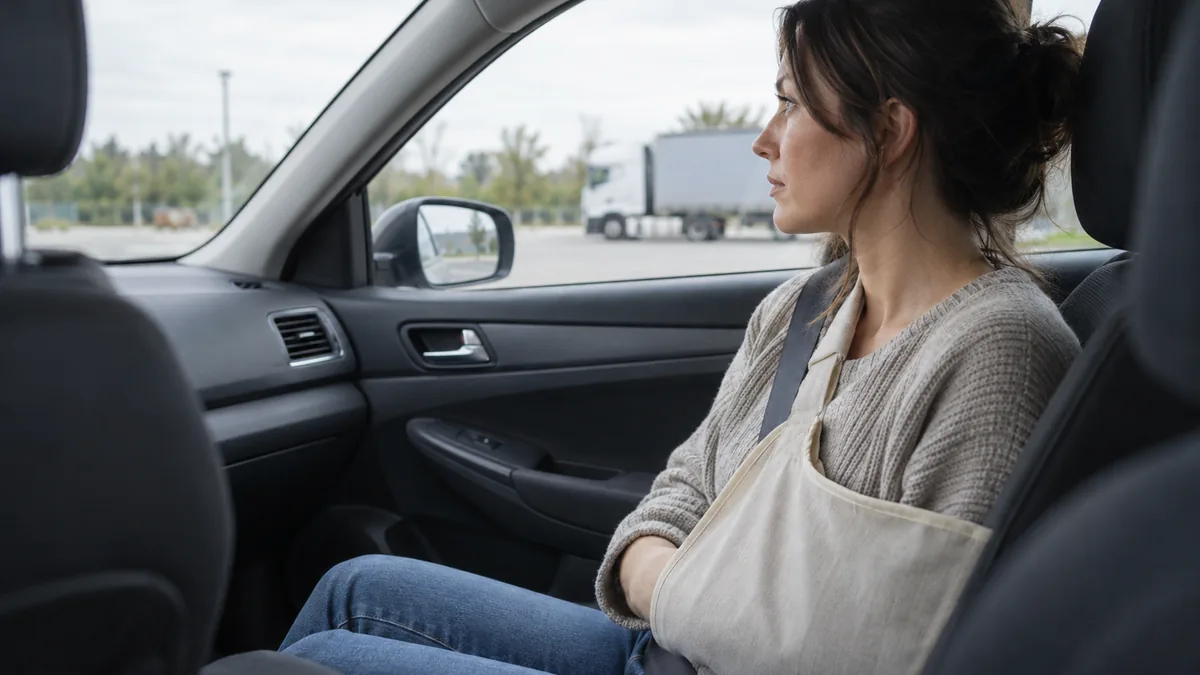
Quick answer: A passenger injured in a truck crash can claim against the liability insurance of every driver whose negligence caused it, including the driver of the vehicle they were riding in. Passengers almost never carry fault of their own, which makes their position unusually strong. If the truck was at fault, the trucking company's policy applies, and federal law sets its floor at $750,000 for most interstate freight. If coverage falls short, uninsured/underinsured motorist coverage may serve as a backstop, depending on the policies involved.
Why Is a Passenger's Claim Different?
A passenger is the one person in the crash who was not driving anything. That single fact reshapes the whole claim. The driver of the car and the driver of the truck may spend the case blaming each other, but neither can plausibly blame the person in the passenger seat. While the drivers fight about percentages, the passenger's task is different: identify every negligent driver, and every insurance policy standing behind each one.
That can include people the passenger would rather not claim against. The law does not care about the seating chart's social ties. If the driver of your own vehicle contributed to the wreck, that driver's liability coverage is one of the sources that pays for your injuries.
Whose Insurance Actually Pays?
Potentially several policies at once, each paying its share:
- The trucking company's liability coverage. When the truck driver was negligent, the claim runs against the motor carrier's policy. As our Texas truck insurance minimums reference explains, a for-hire interstate freight carrier must have at least $750,000 in liability coverage, hazardous cargo pushes the floor to $1 million or $5 million, and most carriers of any size buy layers well above the minimum.
- The at-fault car driver's policy. If the driver of your vehicle, or of a third vehicle, was partly to blame, that driver's auto liability coverage answers for their share.
- Other defendants in the chain. Truck cases often reach past the driver to the carrier's own conduct, and sometimes to a broker or shipper, as we explain in who is liable in a Texas truck accident. Each added defendant can add coverage.
This is why the first legal question in a passenger case is not "was anyone at fault?" but "how does the fault divide, and what coverage sits behind each share?"
How Does Texas Divide Fault Between the Drivers?
Texas uses proportionate responsibility under chapter 33 of the Civil Practice and Remedies Code. The jury assigns each person a percentage of responsibility, each defendant generally answers for its share, and a claimant recovers as long as their own share is 50 percent or less, with the award reduced by that share. We walk through the 51 percent bar in detail on our statute of limitations and fault rules reference page.
For passengers, chapter 33 is mostly good news. The percentage fight happens between the drivers, and the passenger's own share is usually zero. A crash where the truck is 70 percent responsible and your driver 30 percent does not shrink your claim. It splits it between two insurance policies instead of one. The common pattern in a rear-end truck crash shows how this plays out: a truck that fails to stop in time carries most or all of the fault, and the passenger claims against the carrier's coverage directly.
What Happens When Several People Share One Policy?
A crash that injures a passenger usually injures more than one person, and every injured person's claim may draw on the same liability limits. How those limits get divided depends on the policy language, the number of claims, and their severity, so no one should assume the number quoted early is the number available. Two things protect a passenger here. First, thorough coverage work: finding the excess layers, the additional defendants, and the additional policies, rather than accepting the first limit offered. Second, patience: an early settlement that looks generous against one policy can be a fraction of what the full coverage picture supports.
Does Uninsured or Underinsured Motorist Coverage Apply?
Often, and it is the backstop many passengers never think to check. Uninsured/underinsured motorist coverage, UM/UIM, pays when an at-fault driver has no insurance or not enough, and according to the Texas Department of Insurance it also applies in hit-and-run crashes. Texas insurers must offer this coverage, and a customer who does not want it has to reject it in writing, which means a large share of policies carry it.
Depending on the policy terms, a passenger may find UM/UIM protection in more than one place: on the policy covering the vehicle they rode in, or through their own or a household family member's auto policy. Which policies apply, and in what order, turns on the specific language, so an attorney reviewing a passenger case will ask for every auto policy in the passenger's household, not just the ones tied to the crash vehicles.
Were You Riding in the Truck Itself?
Passengers in the truck's cab, a co-driver, a trainee, or an authorized rider, hold claims too, but the analysis shifts. If the injured rider was on the job for the same employer as the driver, workers' compensation may cover the injury and generally limits negligence claims against that employer, though claims against other negligent drivers and companies remain open. An off-duty or non-employee rider generally holds an ordinary negligence claim against whoever caused the crash, including the driver's employer. These cases turn on employment details, so they deserve an early legal review rather than an assumption either way.
What If the At-Fault Driver Was Family?
This is the situation that keeps injured passengers from ever calling a lawyer: the driver was a spouse, a parent, a friend. Understand what a claim actually is. It is a request that the driver's insurance company pay from the liability coverage the driver has been paying premiums for. Refusing to claim does not protect the driver financially. It simply moves the crash's cost onto the injured passenger. In the worst cases, where a family member dies in the wreck, Texas wrongful death law defines which survivors can bring the claim, and the same insurance principles apply.
What Should a Passenger Document?
- Every driver's identity and insurance, including your own driver's. Politeness now becomes a coverage gap later.
- The trucking company's name and USDOT number, photographed from the truck's door if possible.
- The scene: vehicle positions, damage, road and weather conditions, and the crash report number.
- Your medical care from day one, because gaps in treatment become the insurer's favorite argument.
- Your own household auto policies, so the UM/UIM question can be answered from the documents.
Serious truck crashes happen on every road we cover, from I-20 out west to the interstates around Houston, and the trucking company starts working the file the day of the wreck. A passenger should have someone doing the same.
Get a Free Review of Your Passenger Claim
Sgt. Pike, a decorated Army Green Beret with 30 years in the courtroom, more than 10,000 cases handled, and over $750 million recovered for Texans, sorts out the fault shares, the coverage layers, and the UM/UIM questions in passenger cases every year. The case review is free, you pay nothing unless we win, and the coverage questions get answered before you decide anything. Call (832) 250-4888 or reach us online.
Frequently Asked Questions
Whose insurance pays if I was a passenger in a truck accident?
Every negligent driver's liability coverage is potentially on the hook, including the driver of the vehicle you were riding in. If the truck driver was at fault, the claim runs against the trucking company's policy, which federal law requires to be at least $750,000 for most interstate freight carriers. If your own driver shares fault, that driver's policy pays its share too.
Can a passenger be found at fault for a truck accident?
Rarely. A passenger does not control the vehicle, so juries seldom assign a passenger any meaningful share of responsibility. Texas applies proportionate responsibility under Civil Practice and Remedies Code chapter 33, and a claimant recovers as long as their own share is 50 percent or less, with the award reduced by that share.
What if several injured people are sharing one insurance policy?
A liability policy has limits, and when a crash injures several people, their claims may all draw on the same coverage. How the limits get divided depends on the policy and the claims, which is one reason passengers should not rush to accept an early offer. Identifying every applicable policy, including excess layers and coverage from other defendants, often matters more than fighting over one limit.
Does uninsured motorist coverage apply to passengers?
Often, yes. Texas requires insurers to offer uninsured/underinsured motorist coverage, and a customer who does not want it must reject it in writing, so many policies carry it. Depending on the policy terms, UM/UIM coverage on the vehicle you rode in, or on your own or a household member's policy, may apply when the at-fault driver has too little insurance or cannot be identified after a hit-and-run.
Can I make a claim if the at-fault driver was a family member or friend?
Yes. The claim is presented to the driver's insurance company and paid from the liability coverage they bought for exactly this situation. Passengers sometimes hesitate to make any claim because the driver is someone they love, but declining to pursue the coverage does not spare the driver anything. It only leaves the passenger's medical bills unpaid.

No fee unless we win.
Past results do not guarantee a similar outcome.